
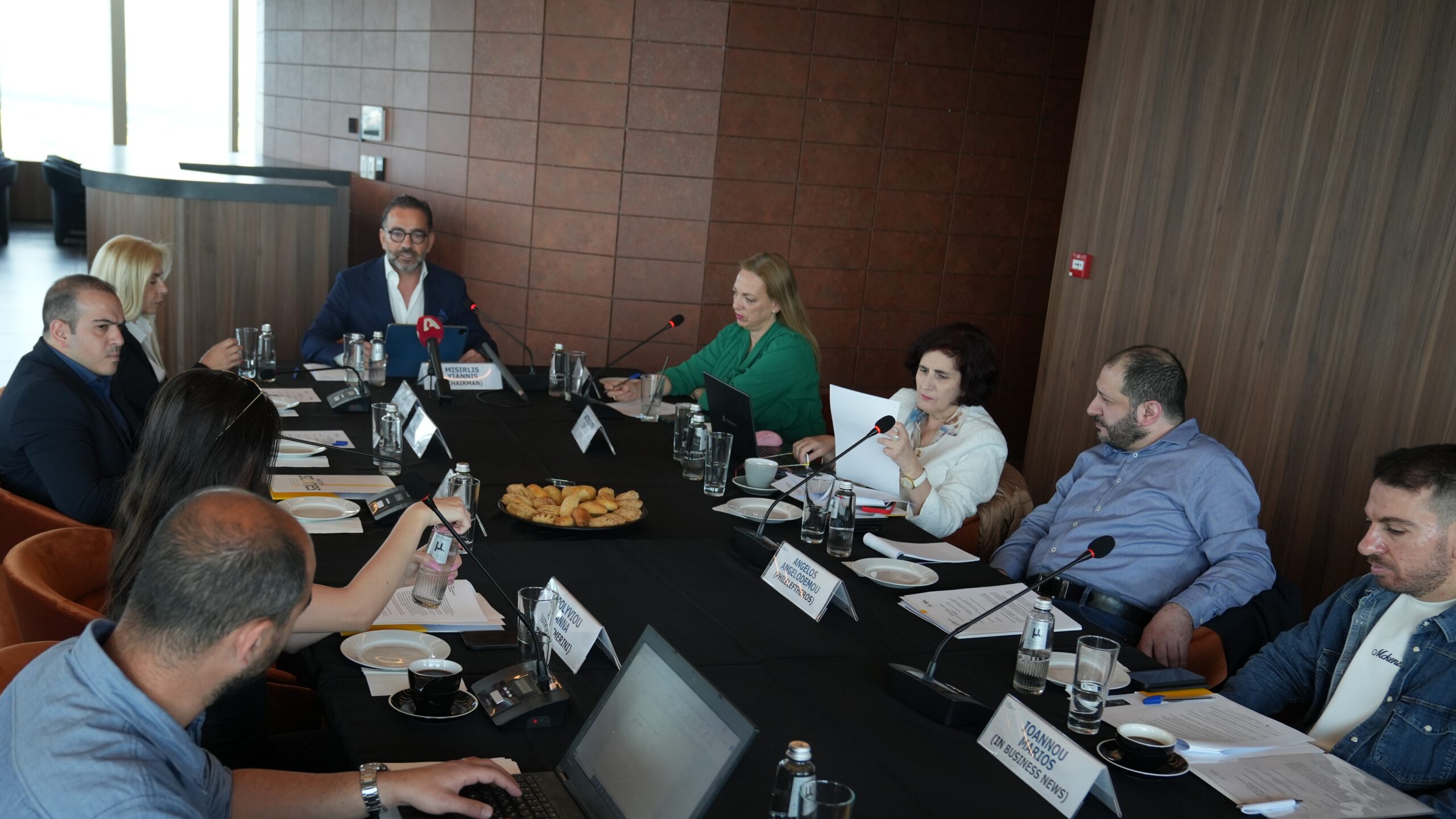
Ahead of the Informal Ministerial Conference on Housing organised by the Cyprus Presidency of the Council of the EU, Build Europe, the association representing European residential developers and homebuilders, and the Cyprus Property Developers Association (CPDA) convened a hybrid press conference in Nicosia to address Europe’s deepening housing crisis and the urgent need to move from diagnosis to delivery.
Housing affordability has become one of the most pressing structural challenges facing the European Union, directly affecting labour mobility, economic competitiveness, demographic trends, and social cohesion. Yet, as highlighted during the conference, the root cause of the crisis is clear: a persistent and growing gap between housing demand and supply.
Yiannis Misirlis, Chairman of the Cyprus Property Developers Association, underlined that housing affordability is ultimately a question of delivery capacity, noting that across Europe the pace of housing production is falling short of demand. He stressed that addressing the crisis requires a decisive shift towards supply-driven policies and a change in mindset, recognising the private sector as a key enabler of delivery. As he explained: “The private sector is the capacity to be mobilised. Developers bring execution capability, capital discipline, and delivery speed.”
Andreas Ibel, President of Build Europe, stressed that “housing affordability is fundamentally a delivery challenge”, calling for an urgent increase in housing supply at scale. He warned that persistent bottlenecks such as complex planning, lengthy permitting, limited land, financing constraints, and regulatory fragmentation continue to hold back supply. He also underlined the central role of private residential developers in delivering new homes, while noting that their capacity depends on a supportive policy and regulatory environment.
Mr Ibel and Mr Misirlis also warned that well-intended housing policies can sometimes have unintended consequences by restricting supply. Measures such as rigid zoning, unpredictable permitting systems, or excessive project-level obligations would risk slowing down housing delivery rather than accelerating it. In this context, they both called on EU policymakers, in view of the upcoming ministerial discussions, to focus on pragmatic approaches that effectively support housing supply delivery, notably by addressing administrative and regulatory bottlenecks, ensuring a level playing field for all housing providers, and mobilising both public and private investment at scale.
Andreas Ibel concluded: “The EU needs to adapt its housing and energy policies to the current geopolitical and economic context, marked by inflationary pressures, rising construction costs, and tighter financial conditions. Policies designed during a different economic context must be rethought today, so they help deliver housing instead of slowing it down. Europe does not lack demand, nor capacity to build. It lacks a policy framework that enables delivery at scale”.
Yiannis Misirlis said: “Affordable housing can’t be created by regulation alone, but it requires functioning, efficient housing delivery systems. This means accelerating and bringing full transparency to permitting, ensuring policy stability and regulatory predictability, and adopting a pragmatic, scalable approach to the green transition.”, he emphasised, adding that “if we get this right, we will achieve far more than addressing a housing challenge. We will strengthen Europe’s economic fabric, reinforce social cohesion, and ensure that access to housing remains a foundation – not a barrier – to opportunity.”

